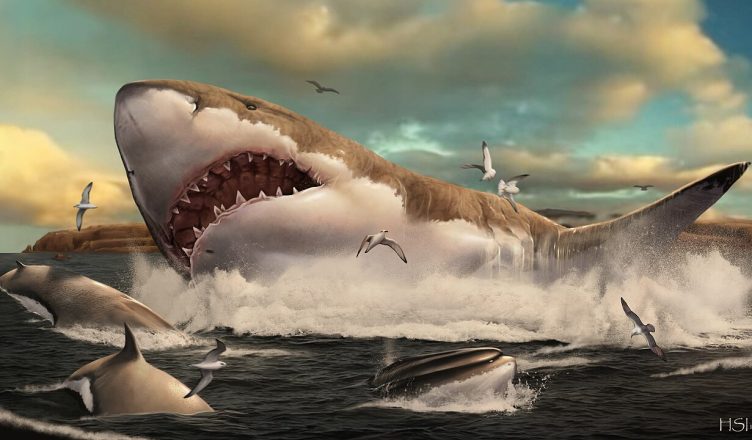
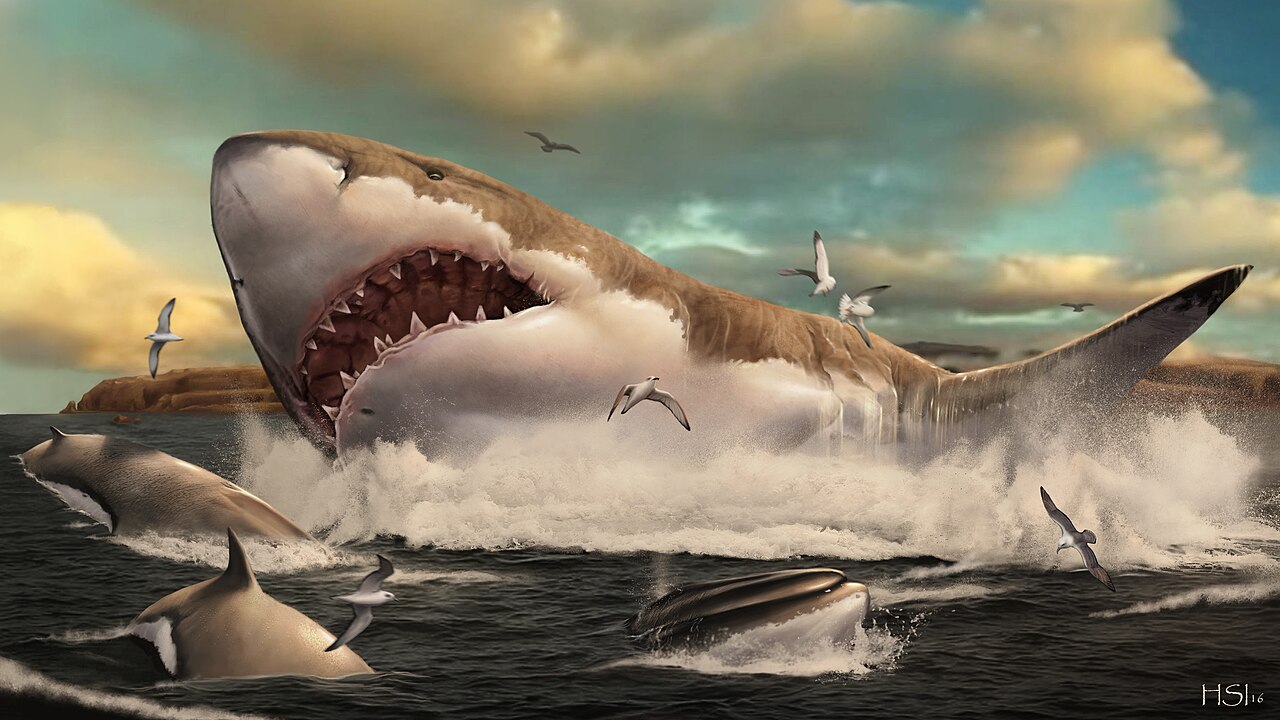
Megalodon is the most famous shark that ever lived, and also the most misunderstood. For roughly 20 million years this giant hunted whales in warm seas across the planet. Then it vanished. Ever since, people have argued about how big it really was, why it died out and whether a few could still be hiding in the deep ocean. Here is what fossils and modern research actually tell us.
[…]
What Was the Megalodon?
Megalodon (Otodus megalodon) was a giant mackerel shark that lived from about 23 million to around 3.6 million years ago, during the Miocene and Pliocene epochs. Its name means “big tooth”, which fits: almost everything we know about it comes from teeth. Shark skeletons are made of cartilage, which rarely fossilises, so complete megalodon skeletons have never been found. A few partial vertebral columns, most famously one from Belgium, help scientists estimate its body shape.
For decades megalodon was placed in the same family as the great white shark and was even thought to be its ancestor. Most researchers now put it in the genus Otodus, a separate lineage of mega-toothed sharks. The great white is more like a distant cousin that later competed with it.
How Big Was the Megalodon?
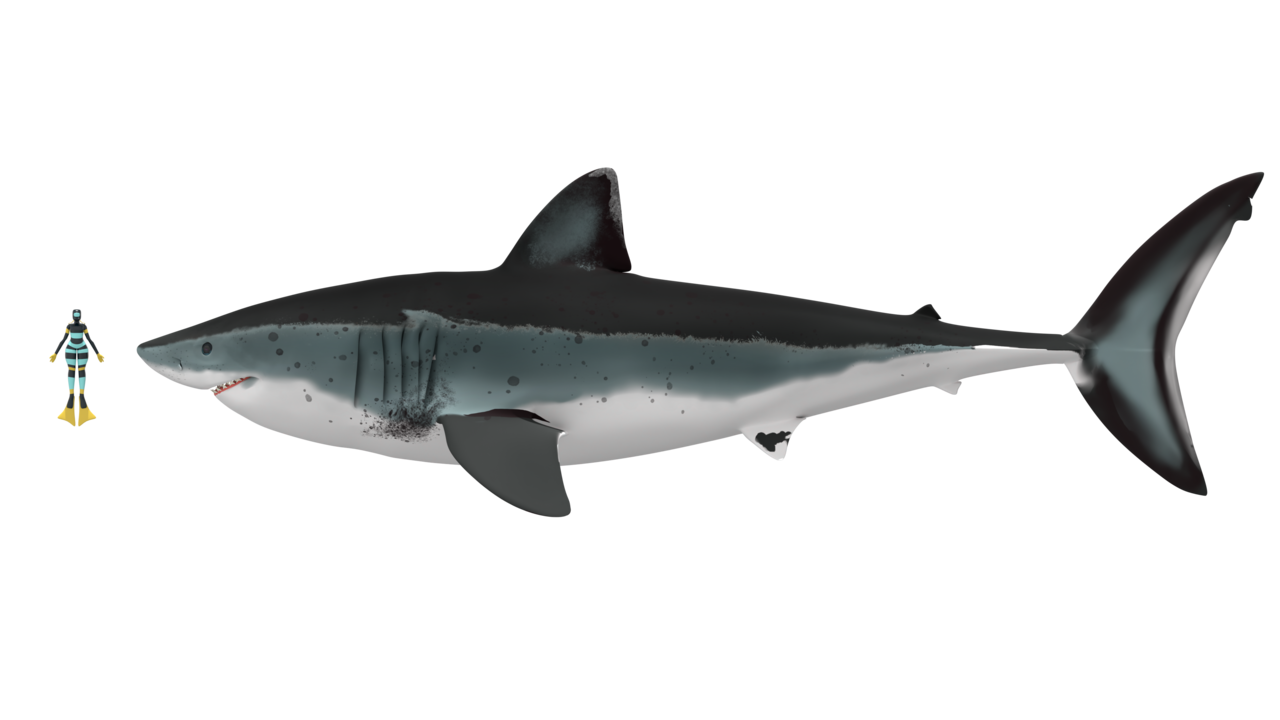
Size is the question everyone asks first. Because no full skeleton exists, every estimate is calculated from tooth size and from the proportions of living sharks. Most studies place large adults at roughly 15 to 20 metres long. Some recent work suggests megalodon had a slimmer, longer body than a scaled-up great white, which would mean the very largest individuals could have approached 24 metres.
Weight estimates are even less certain, but they usually land in the range of several tens of tonnes for a big adult. That makes megalodon one of the largest predatory fish known, and by far the largest predatory shark.
Megalodon vs Blue Whale
Despite its reputation, megalodon was not bigger than a blue whale. Blue whales can grow to around 30 metres and weigh well over 150 tonnes, several times heavier than even the most generous megalodon estimates. Megalodon was a giant, but the blue whale remains the largest animal that has ever lived.
Megalodon Teeth: The Fossils Behind the Legend
[…]
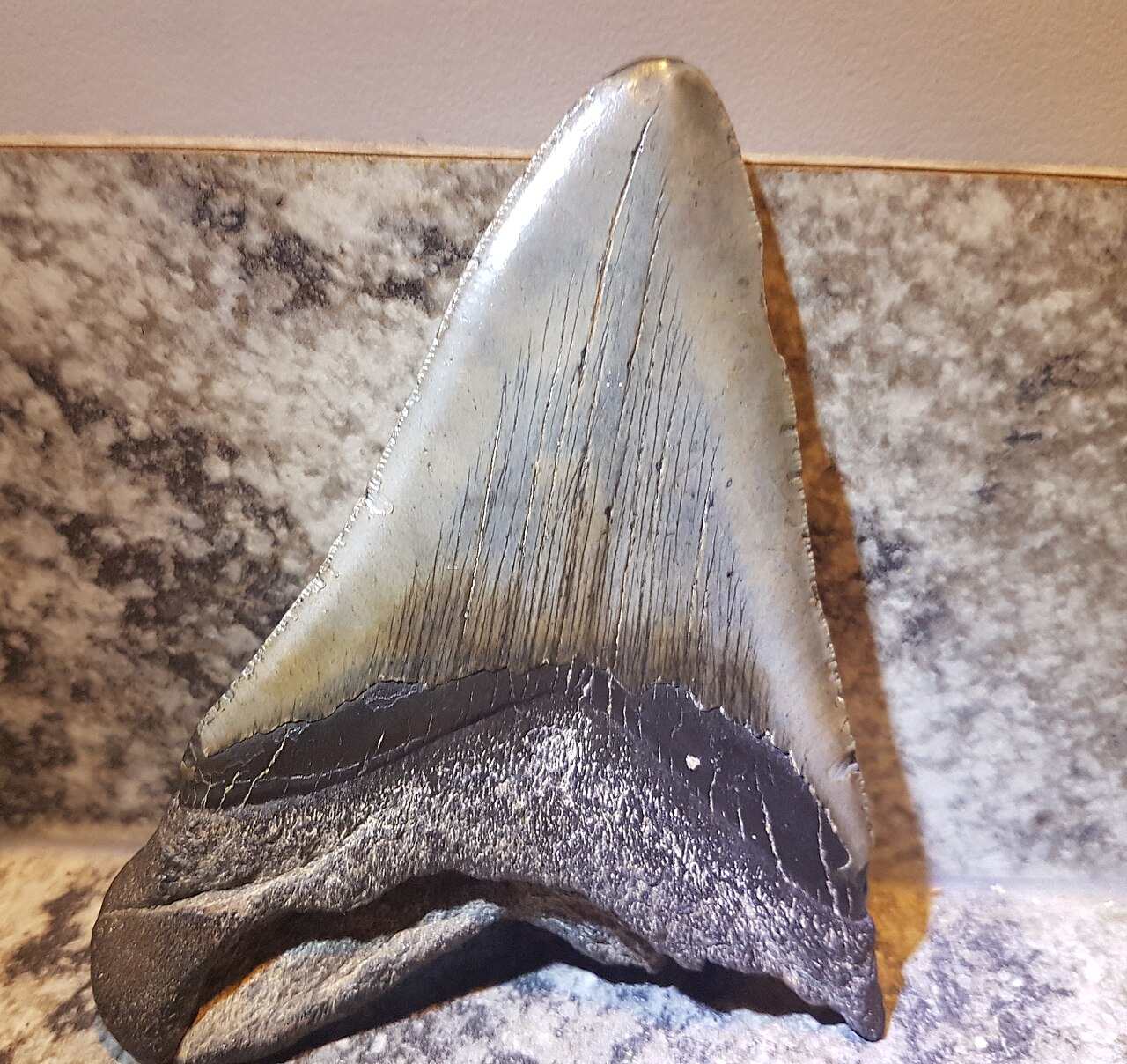
Megalodon teeth are triangular, thick and finely serrated, and the biggest ones measure about 18 centimetres along the slanted edge. Like all sharks, megalodon replaced its teeth throughout life, losing thousands of them. That is why these fossils turn up on every continent except Antarctica, from riverbeds in the southeastern United States to marine deposits in Peru, Chile, Morocco, Japan and Australia.
The teeth also hold chemical clues. Isotope studies of the enamel have shown that megalodon fed very high in the food chain and that it was probably partly warm-bodied, keeping its body several degrees warmer than the surrounding water. That would have helped it swim fast and hunt in cooler seas, but it also meant it needed a huge amount of food.
What Did Megalodon Eat?
Fossil whale bones with deep, serrated bite marks show that megalodon preyed on whales, seals, sea cows and large fish. Its estimated bite force, between roughly 108,000 and 182,000 newtons, is among the strongest of any animal studied. Some fossils suggest it attacked the tail flukes and flippers of whales first, crippling prey before the killing bite.
Young megalodons seem to have grown up in shallow, warm nursery areas. A well-known fossil site in Panama contains many small megalodon teeth, which researchers interpret as a place where juveniles were safer from larger predators.
[…]
When and Why Did Megalodon Go Extinct?
The youngest reliable megalodon fossils are about 3.6 million years old. No single cause explains its disappearance, but several pressures came together:
- Cooling oceans. As the global climate cooled during the Pliocene, warm coastal waters shrank, and with them the nurseries megalodon relied on.
- Changing prey. Many small and medium-sized whales declined, while surviving baleen whales grew bigger and moved into colder polar waters where megalodon struggled to follow.
- Competition with great white sharks. Studies of zinc isotopes in fossil teeth show that early great whites fed on similar prey. A smaller, more flexible predator may have outcompeted a giant with enormous energy needs.
Is Megalodon Still Alive?
Stories of megalodon surviving in the Mariana Trench or other deep waters are popular, partly thanks to a 2013 television mockumentary that presented fiction as fact. The evidence firmly says no:
- Megalodon shed teeth constantly. If it still existed, fresh teeth would be found on the sea floor, yet none younger than about 3.6 million years has ever turned up.
- It was a warm-water, surface and coastal hunter. The cold, food-poor deep ocean could never feed an animal of that size.
- A living megalodon would leave bite marks on modern whales, and they would be impossible to miss.
The real mystery is less about survival and more about biology: exactly what megalodon looked like, how fast it grew and how much it weighed are still debated. If you enjoy prehistoric giants, compare it with the armoured fish Dunkleosteus, the long-necked plesiosaur often linked to the Loch Ness Monster, or living “fossil” sharks such as the frilled shark.
10 Quick Megalodon Facts
(1) Its scientific name today is Otodus megalodon, though older books call it Carcharodon or Carcharocles megalodon.
(2) It lived for about 20 million years, far longer than modern humans have existed.
(3) Large adults were roughly 15 to 20 metres long, three times the length of a big great white.
(4) Its largest teeth are about the size of an adult’s hand.
(5) It lived in oceans worldwide, preferring warm coastal and open waters.
(6) Whales were a major part of its diet.
(7) Its bite was one of the most powerful in the history of life.
(8) It was probably partly warm-blooded, like today’s great white and mako sharks.
(9) Juveniles grew up in shallow nursery areas.
(10) It disappeared about 3.6 million years ago, and there is no evidence it survives today.
Fascinated by strange ocean life that does still exist? Read about the giant isopod and the ferocious Goliath tigerfish.
Read also: Top 10 Giant Isopod Characteristics that Have Helped It Survive | 20 Facts about Megamouth Shark to Know What this Creature is | Top 15 Blobfish Characteristics that Have Helped It Survive