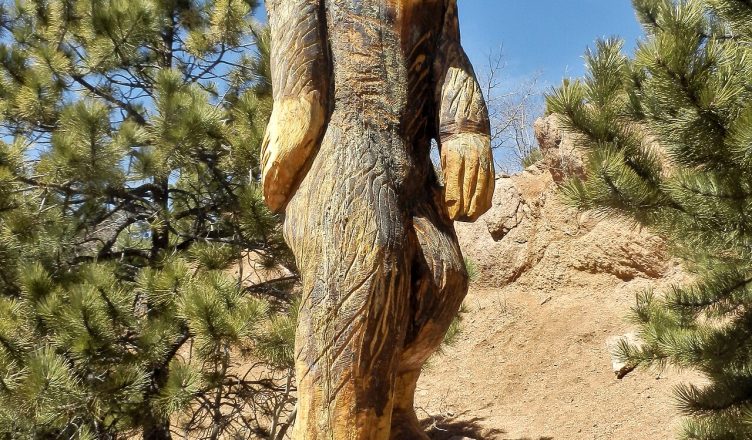
Bigfoot, also called Sasquatch, is North America’s most famous cryptid: a huge, hairy, ape-like creature said to walk upright through the forests of the Pacific Northwest. Thousands of people say they have seen it, and a 59-second film from 1967 is still argued over today. Here are the ten most famous Bigfoot sightings, with the photos and footprints behind them and what investigators later discovered.
Quick facts
- Other name: Sasquatch, from a Halq’emeylem word roughly meaning “hairy man”
- Typical description: upright, covered in hair, usually 6–9 ft (1.8–2.7 m) tall
- Hotspot: the Pacific Northwest, with about a third of all reports
- Most famous evidence: the Patterson–Gimlin film, 20 October 1967
- Bodies or bones found: none
1. The Sasquatch stories of J. W. Burns (1920s)
The name Sasquatch reached the wider world through J. W. Burns, a teacher and Indian agent who worked with the Sts’ailes Nation in British Columbia. In 1929 he published stories of hairy giants in Maclean’s magazine, using an anglicised form of the Halq’emeylem word sasq’ets.
2. Jerry Crew’s giant footprints at Bluff Creek (1958)
In 1958 bulldozer operator Jerry Crew, working for a logging company in Humboldt County, California, found huge 16-inch footprints around his equipment in Six Rivers National Forest. He made a plaster cast, and on 6 October 1958 the Humboldt Times put his photo on the front page. Reporter Andrew Genzoli’s stories spread a new name for the creature: Bigfoot.
3. The Ray Wallace revelation (2002)
In 2002, after the death of Ray Wallace, a co-worker on the same logging site, his family showed reporters a pair of carved wooden feet kept in his basement and said he had made the 1958 tracks as a prank. Many Bigfoot believers dispute that he made all of them.
4. The Patterson–Gimlin film (1967)
On 20 October 1967 Roger Patterson and Bob Gimlin filmed a large, dark, hairy figure walking along a creek bed at Bluff Creek in Northern California. The 59.5-second clip is the most famous Bigfoot evidence in existence. Scientists have generally judged it to have no scientific value, and a person in a costume remains the most common explanation.
5. The Toledo, Washington tracks (1930s)
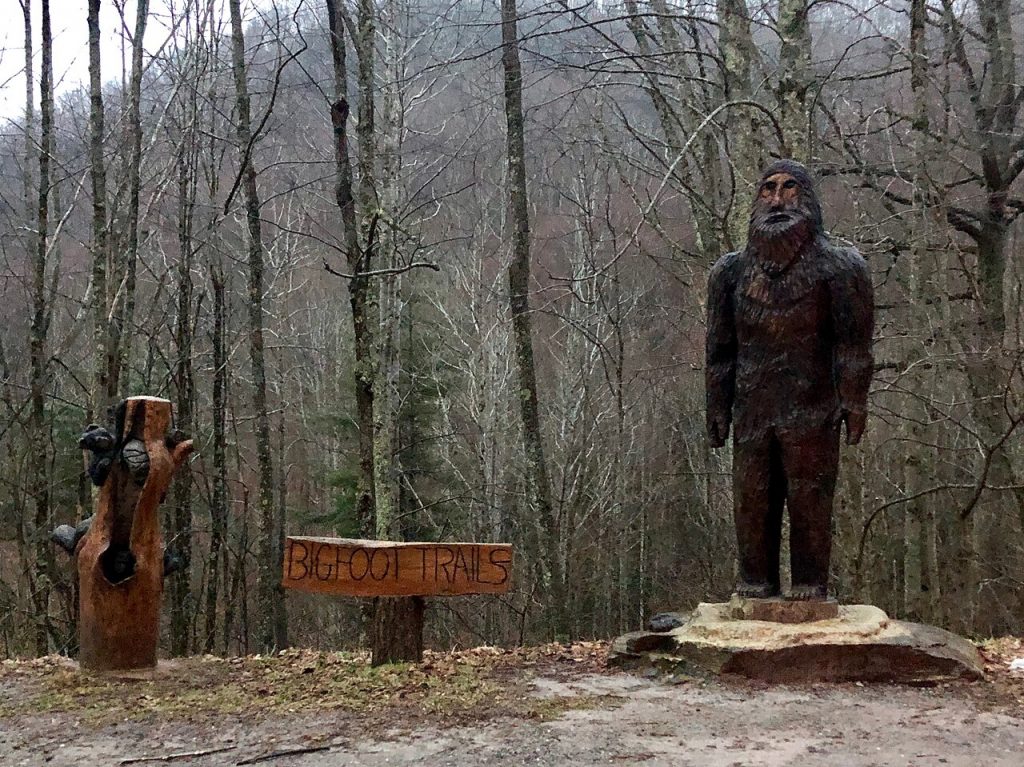
Hoaxes are as old as the legend. In 1982 a man named Rant Mullens revealed that in the 1930s he and fellow foresters near Toledo, Washington, had used carved wooden feet to make giant tracks.
6. Washington’s Bigfoot law (1969)
Bigfoot reports in Washington state became so common that in 1969 lawmakers there made killing a Bigfoot a crime, with heavy fines and prison time. The penalty was reduced in 1984, and areas were declared Sasquatch refuges.
7. The frozen Bigfoot of Georgia (2008)
In July 2008 Rick Dyer and Matthew Whitton announced they had found a dead Bigfoot in the woods of northern Georgia and showed a body kept in a freezer. When it was thawed, the “Bigfoot” turned out to be a rubber costume with fake hair. The two men admitted the hoax.
8. The DNA tests of 2014
In 2014 researchers from the University of Oxford and the Lausanne Museum of Zoology published DNA results from about 30 hair samples said to come from Bigfoot and other “anomalous primates”. One was human; most of the rest came from bears and other known animals.
9. Over 10,000 sightings in the United States
Bigfoot reports come from almost every US state. Live Science has reported more than 10,000 claimed sightings in the continental US, with Washington and California leading the list.
10. Bigfoot sightings today
People still report Bigfoot every year, especially in the forests of the Pacific Northwest, where about a third of all sightings come from. Trail cameras, phone videos and audio recordings of strange calls appear online regularly, but none has produced a body or bones.
Is Bigfoot real?
Most scientists do not think so. No skeleton, body or reliable DNA has ever been found, and many sightings can be explained by black bears, which can stand five to seven feet tall on their hind legs, along with hoaxes and mistaken identity. Some supporters, including anthropologist Grover Krantz, suggested Bigfoot could be a surviving Gigantopithecus, a giant ape from Asia, but no Gigantopithecus fossils have ever been found in the Americas.
More famous cryptids: the Yeti, Bigfoot’s Himalayan cousin, the Wendigo, the Mothman and the Jersey Devil, or browse all our monster stories.
Sasquatch came first
Although “Bigfoot” is now the more common name, it is the younger of the two. According to Merriam-Webster, the word Sasquatch was in use about 50 years before Bigfoot, which only appeared after the 1958 footprints in California.
Where Bigfoot is reported most
Bigfoot reports come from almost every state, but a few stand out. Data from the Bigfoot Field Researchers Organization gathered in 2019 showed more than 2,000 reports from Washington and more than 1,600 from California. Roughly a third of all claimed sightings come from the Pacific Northwest, a region of huge, dense forests where large animals can easily be glimpsed for a moment and then lost from view.
Black bears and grizzlies
Scientists point to bears as the most likely explanation for many sightings. A black bear standing on its hind legs can be five to seven feet tall, and a grizzly can reach eight to nine feet. Seen briefly at dusk, among trees, a bear walking upright looks remarkably like the classic Bigfoot.
Bigfoot refuges
Bigfoot has also found its way into local law. After Washington state’s 1969 measure, the penalty was reduced to a misdemeanour in 1984 and an area was declared a “Sasquatch refuge”. Whatcom County, in the north of the state, declared itself a Sasquatch refuge in 1991.
Famous believers
Not everyone dismisses Bigfoot. In 2002 the primatologist Jane Goodall said in an interview that she was sure such creatures exist, a remark Bigfoot enthusiasts still quote. Most of her fellow scientists remain unconvinced.
Bigfoot FAQ
What is the difference between Bigfoot and Sasquatch?
None. They are two names for the same creature. Sasquatch is the older name, from British Columbia; Bigfoot became popular after the 1958 footprints in California.
Where is Bigfoot most often seen?
In the Pacific Northwest, especially Washington and northern California.
How tall is Bigfoot?
Witnesses usually describe a creature 6 to 9 feet (1.8 to 2.7 m) tall, with some claims of up to 15 feet.
Is the Patterson–Gimlin film real?
It has never been proven either way, but most scientists believe it shows a person in a costume.
Featured image: Alexander Migl, CC BY-SA 4.0, via Wikimedia Commons.