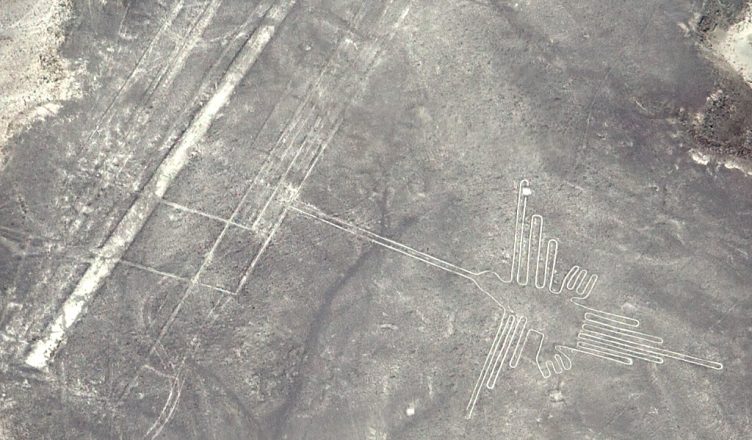
On a dry plateau in southern Peru, hundreds of giant drawings stretch across the desert floor: a hummingbird, a monkey, a spider, straight lines running for kilometres and shapes so large they only make sense from the air. The Nazca Lines have puzzled travellers, scientists and fans of ancient mysteries for almost a century. Who made them, how were they drawn so precisely, and what were they for?
[…]
What Are the Nazca Lines?
The Nazca Lines are geoglyphs, designs made on the ground, spread across the desert between the towns of Nazca and Palpa, about 400 kilometres south of Lima. They include straight lines, triangles, trapezoids, spirals and more than 70 figures of animals, plants and humanlike beings. Some lines run almost perfectly straight for several kilometres across uneven ground. In 1994 UNESCO listed the lines and geoglyphs of Nasca and Palpa as a World Heritage Site.
Who Made the Nazca Lines and When?
Most of the geoglyphs were created by the Nazca culture, which flourished on Peru’s southern coast between about 500 BCE and 500 CE. The Nazca people are also known for their colourful pottery and woven textiles, and many of the animals in the desert drawings, such as the hummingbird and the monkey, appear in the same style on their ceramics. Some older figures on the Palpa hillsides were made by the earlier Paracas culture.
How Were the Lines Made?
The technique was surprisingly simple. The desert surface is covered with reddish-brown stones darkened by iron oxide. Beneath them lies lighter, yellowish ground. By removing the top layer of stones and piling them along the edges, the Nazca created pale lines that stand out clearly.
The figures survived for some 2,000 years because the Nazca Desert is one of the driest places on Earth. It almost never rains, and the wind near the ground is weak, so little erodes or covers the lines.
Many people assume such precise shapes could only have been planned from above. In 1982 the investigator Joe Nickell and a small team reproduced one of the large Nazca figures, the condor, using only wooden stakes, string and simple measurements. The result was accurate enough to show that ancient people with basic tools could have done the same.
The Most Famous Nazca Figures
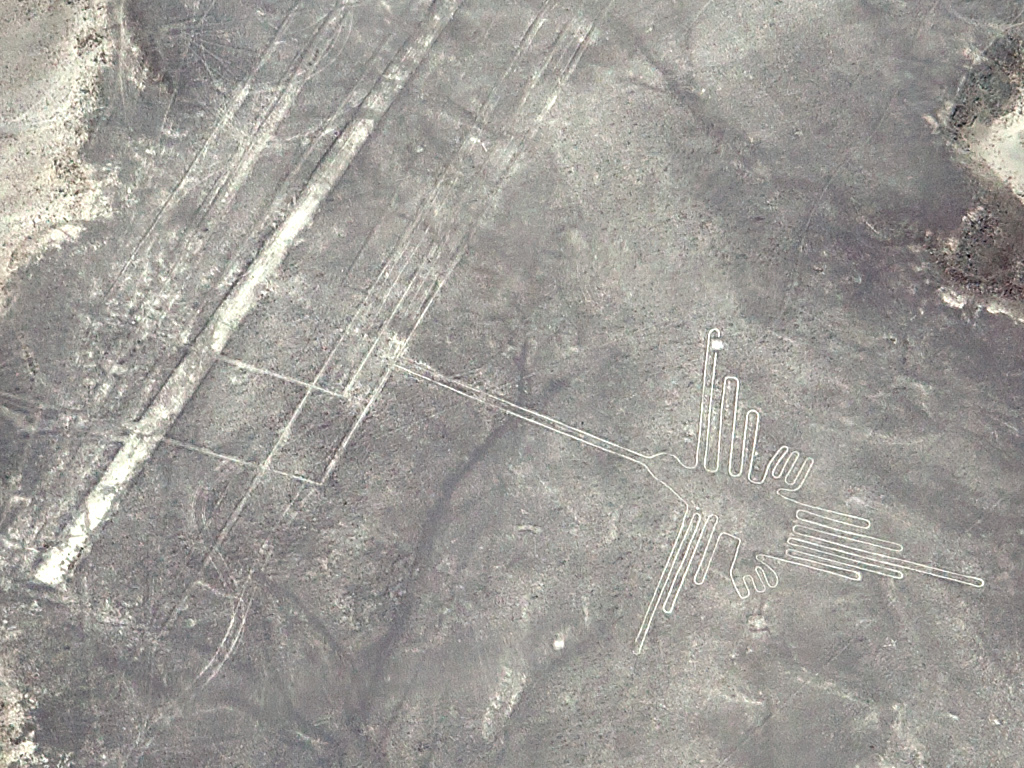
- The Hummingbird, around 90 metres long, with long straight wings and a needle-like beak.
- The Monkey, known for its spiral tail and hands with an unusual number of fingers.
- The Spider, a precise drawing that some researchers compare with a spider species from the Amazon rainforest.
- The Condor, one of the largest figures, with wings stretching more than 100 metres.
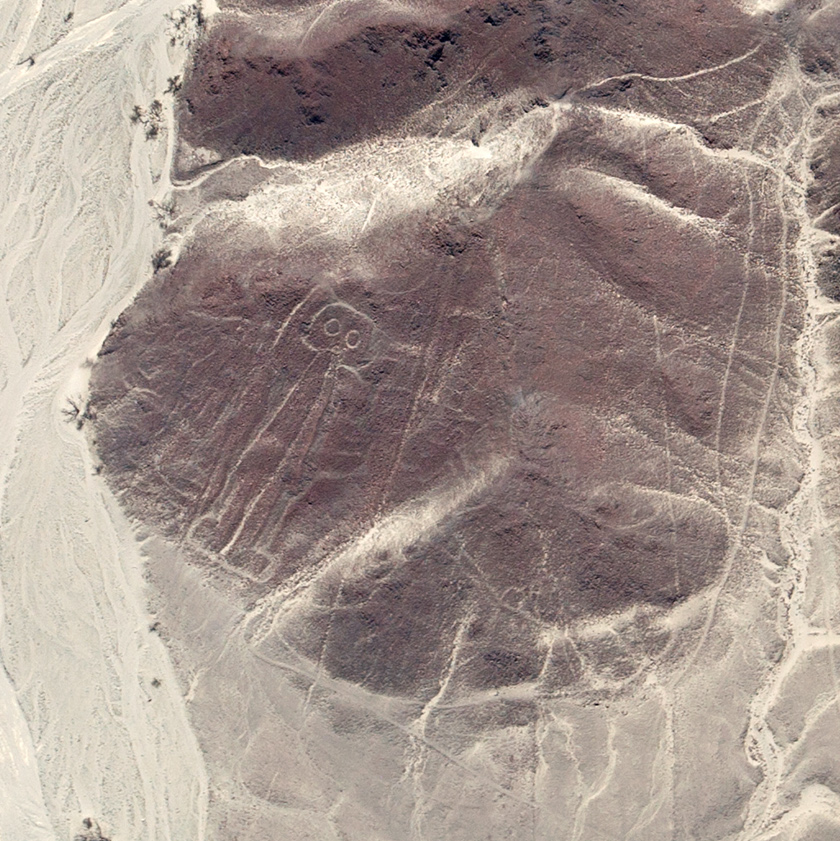
- The Astronaut, a round-headed figure on a hillside, also called “the Owl Man”. Its nickname has made it a favourite of alien theorists.
- The Lizard, cut in two by the Pan-American Highway when it was built in the 1930s, before the lines were widely understood.
[…]
Why Were the Nazca Lines Made? The Main Theories
1. An Astronomical Calendar
The American historian Paul Kosok, who studied the lines from 1939, saw the sun set along one of them on the winter solstice and called the desert “the largest astronomy book in the world”. The German mathematician Maria Reiche continued this research for decades and became the lines’ most devoted protector. However, later studies, including one by the astronomer Gerald Hawkins in 1968, found that the lines do not point to the sun, moon or stars more often than chance would predict.
2. Ritual Walking Paths
Many archaeologists now think the lines were meant to be walked rather than seen. Each figure is drawn as a single continuous line that never crosses itself, so a person could enter, follow the whole shape and come out again. Pottery fragments found along the lines suggest people gathered there for ceremonies, possibly processions.
3. Water and Fertility Rituals
In a desert, water means life. Some researchers link the geoglyphs to rituals asking the gods for rain. Others have suggested that certain lines mark underground water sources or point towards the Nazca’s ingenious underground aqueducts, called puquios, some of which are still used today.
4. Ancient Aliens
The most famous theory is also the least supported. In his 1968 book Chariots of the Gods?, Erich von Däniken suggested the lines could be landing strips for extraterrestrial spacecraft. Archaeologists point out that the ground is soft, the “runways” lead nowhere, and anything that landed there would have destroyed the lines. Every step of making them can be explained with human labour and simple tools.
5. Seen From the Sky?
If the figures can only be fully appreciated from above, who were they made for? One answer is the gods. Another is more daring: in 1975 an expedition built a hot-air balloon from materials that would have been available to the Nazca and flew it over the desert to argue that the Nazca might have flown themselves. Few archaeologists accept this, but it remains one of the most colourful ideas about the lines.
New Discoveries With Drones and AI
The Nazca Lines are still giving up secrets. Researchers from Yamagata University in Japan have been mapping the area for years, and in 2019 they announced more than 140 new figures. In 2020 a faded cat geoglyph was uncovered on a hillside. Then, in 2024, a study using artificial intelligence to scan aerial images identified 303 new figurative geoglyphs in just a few months, nearly doubling the number of known figures. Many of the newly found designs are smaller and show people and domestic animals, and they lie close to ancient footpaths.
Threats to the Nazca Lines
The lines are fragile. A footprint can last for centuries in this desert. In 2014 activists left marks near the Hummingbird during a protest, and in 2018 a truck driver damaged parts of three lines after ignoring warning signs. Mining, illegal settlements and climate change are also concerns. Visitors today usually see the lines from small sightseeing flights or from viewing towers along the Pan-American Highway, and walking on the protected area is forbidden.
Nazca Lines Quick Facts
(1) The lines are about 2,000 years old.
(2) They were made mostly by the Nazca culture between about 500 BCE and 500 CE.
(3) They were created by removing dark surface stones to reveal lighter ground.
(4) There are hundreds of straight lines and geometric shapes, plus hundreds of figures.
(5) Each large animal figure is drawn with one continuous line.
(6) Maria Reiche spent around 50 years studying and protecting the lines.
(7) The site has been a UNESCO World Heritage Site since 1994.
(8) AI-assisted research is still finding new geoglyphs today.
If ancient puzzles are your thing, explore the mystery facts about Göbekli Tepe, a temple complex thousands of years older than Nazca, the Antikythera Mechanism, the world’s oldest known analogue computer, and the Olduvai Gorge, which rewrote the story of human origins. For places linked to stranger legends, see the 12 Vile Vortices on Earth.